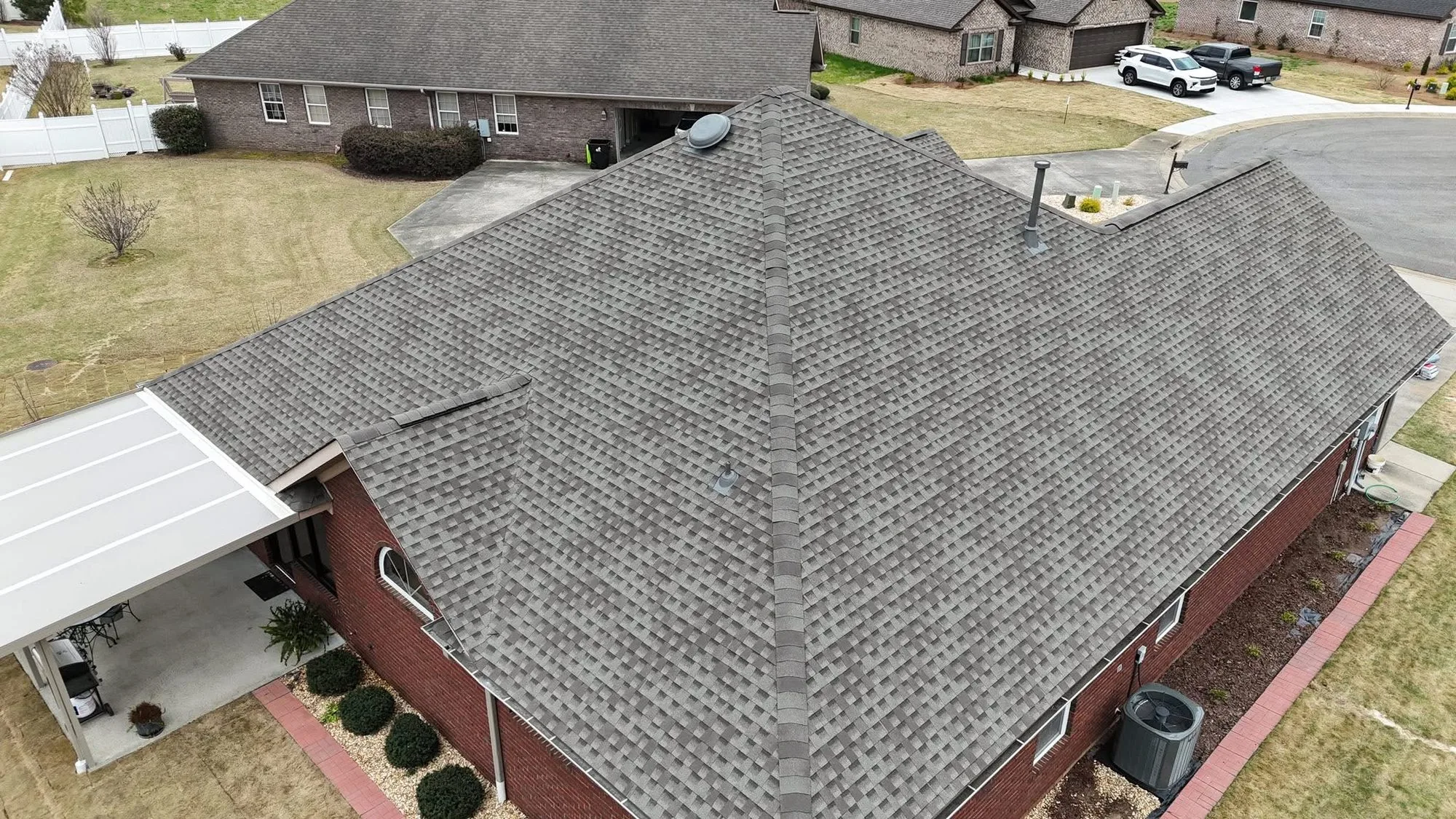


Hail Damage Is Often Hidden
Spring storms in Central Alabama can bring hail, and even hail that does not look severe from your front porch can leave real damage on your roof. The tricky part is that hail damage is often subtle. It does not always punch holes or leave dramatic marks you can spot from the yard. More often, it shows up as small bruises, cracks, and worn spots that quietly affect how well your roof holds up over time.
Knowing what to look for, and knowing when to call in a professional, can help you catch problems before they turn into bigger, more expensive issues like leaks or interior water damage. Below are seven signs worth watching for after any hailstorm moves through your neighborhood.
The 7 Signs to Watch For
1. Dark, bruised spots on shingles. One of the most common signs of hail damage is a dark, slightly soft spot on an asphalt shingle, often described as a bruise. These spots happen when hail impacts the shingle hard enough to compress the material without necessarily tearing it open. They can be difficult to see from the ground and are usually easier to spot up close or by feel.
2. Granule loss. Asphalt shingles are coated with small granules that protect the shingle from sun and weather. Hail impacts can knock these granules loose, exposing the darker asphalt layer underneath. You might notice granules collecting in gutters or downspouts after a storm, which is often one of the easier signs to catch without climbing a ladder.
3. Cracked or split shingles. Larger hail or repeated impacts can actually crack or split shingles. This type of damage is more serious because it can create a direct path for water to get underneath the shingle and into the roof deck, especially during the heavy rain that often follows a hailstorm.
4. Dents on metal flashing or vents. Hail does not just affect shingles. Metal components like flashing, vent covers, and gutter edges often show dents or small dings after a hailstorm. Because these materials are harder than asphalt shingles, dents on them can actually be a helpful clue about the size and force of the hail your roof experienced.
5. Soft spots when walking the roof. If a professional walks your roof during an inspection, they may check for soft spots underfoot. Repeated hail impacts in one area can weaken the roof deck or underlying layers over time, even if the surface damage looks minor. This is one of the reasons a hands-on inspection is more reliable than a visual check from the ground.
6. Leaks or water stains inside the home. Sometimes the first sign of hail damage is not on the roof at all, it is inside your home. Water stains on ceilings, damp spots in the attic, or a musty smell after a storm can all point back to compromised shingles or flashing letting water in. If you notice any of these signs, it is worth having your roof checked as soon as possible.
7. Dented or damaged gutters and downspouts. Beyond granules collecting in the gutter system, you may also notice dents or dings on the gutters themselves after a hailstorm. Damaged gutters alone are not necessarily a sign of roof damage, but they are a strong hint that hail large enough to affect the roof came through your property, and they are worth mentioning to whoever inspects your roof.
- Dark, bruised spots on shingles
- Granule loss collecting in gutters and downspouts
- Cracked or split shingles
- Dents on metal flashing or vents
- Soft spots when walking the roof
- Leaks or water stains inside the home
- Dented or damaged gutters and downspouts
Why These Signs Are Easy to Miss
Many of these signs share a common trait: they are not dramatic. Unlike a fallen tree branch or a missing section of roof, hail damage tends to be scattered, small-scale, and easiest to notice only when you know specifically where and how to look. That is exactly why so many homeowners drive past hail-damaged roofs every day without realizing anything is wrong.
It is also worth remembering that hail damage can worsen gradually. A bruised shingle today might crack fully after a few more months of sun exposure and rain, which is part of why addressing it sooner rather than later tends to be the more practical approach.
What to Do If You Spot These Signs
If you notice any of these signs, or even if you simply know hail came through your area, the best next step is scheduling a professional roof inspection. A trained inspector can get on the roof safely, check both obvious and hidden damage, and document everything clearly with photos.
This documentation is especially helpful if you decide to file an insurance claim, since it gives you a clear record of the damage shortly after the storm. Keep in mind that your insurance company will ultimately determine what is covered under your policy, so it is a good idea to review your policy details before filing.
Acting promptly after a storm, rather than waiting to see if problems develop on their own, generally puts you in a stronger position whether you decide to pursue repairs, a replacement, or an insurance claim.
Schedule Your Free Inspection Today
Hail damage rarely gets better on its own, and catching it early can save you from bigger headaches down the road. Peak Standard Roofing offers free roof inspections for homeowners throughout Prattville and the River Region, so you can find out exactly where your roof stands. Call (334) 531-2329 to schedule your free inspection.